
Women's haircut
60 minutes, $75. Consultation-led shape, layers and finish.
Haircuts in Venice, FL
5.0 ★ from 100+ Google reviews · 30 years · 15,000 clients · Master Cosmetologist
Cuts planned for the way you actually style at home.
Looking for a precision haircut near you in Venice, FL? Consultation-led haircuts decided by face shape, hair texture, density and daily styling. Toni & Guy precision cutting method underneath every visit. Bob, lob, pixie, shag, long layers, face-framing layers, fringe trims, men's scissor cuts. Cuts that work for fine, thick, curly, and coarse hair.
Haircuts from $60-$75 · 45 minutes to 1 hour · Currently booking 2 to 3 weeks out
Two-Week Sit-Right Guarantee. If the cut or color does not sit right within two weeks, contact me. I will fix it free.
The method
Before any color, foil, or shears, I run the Pre-Cut Read™: density, growth pattern, porosity, lifestyle fit, and what the last three stylists missed.
Three minutes of looking saves six weeks of fixing.
Every appointment starts here.
Choose with confidence
Quick decision guide
60 minutes, $75. Consultation-led shape, layers and finish.
45 minutes, $60. Precision cut with home styling notes.
45 minutes, $60. Style refresh between cuts.
Pricing and timing
I look at your hair dry first. Face shape, hair texture, growth pattern, density, and how you style on a normal morning. Then the precision haircut is planned before the first section comes down. Bob, lob, pixie, shag, long layers, internal layers, face-framing layers, bangs and fringe trims, scissor-led men's cuts.
Fine hair, thick hair, curly hair, coarse hair all get different layer placements. Shape and balance is the key to a great haircut, and the technical is built in from teaching so many years. I fix rushed cuts most days, so I never rush yours.
The two-week guarantee. If the cut or color does not sit right within two weeks, contact me. I will fix it free.
| Service | Time | Price |
|---|---|---|
| Women's Haircut | 1 hr | $75 |
| Men's Haircut | 45 mins | $60 |
| Blow Out | 45 mins | $60 |
Before you book
Women's precision haircut is $75 for 1 hour. Men's precision haircut is $60 for 45 minutes. Blow-out is $60 for 45 minutes. All prices are published and fixed. No surprise upcharges.
No. By appointment only. Online booking shows real-time availability. Text or call (941) 599-4868 for big changes or anything you are not sure how to book.
Men's is 45 minutes. Women's is 1 hour. The time includes the Pre-Cut Read consultation, the cut, the blow-out finish, and home-styling notes. Not three separate appointments.
Yes. I read curl pattern, density, and porosity during the Pre-Cut Read and cut to work with the natural curl, not fight it. Curly cuts are usually done dry to see the actual curl shape.
Many clients maintain shape every 6 to 8 weeks. Timing depends on length, texture and how crisp you want the shape to stay.
Yes. Bring examples of what you like and what you do not want. Photos help clarify length, layers, face-framing and finish.
Yes. The consultation considers face shape, hair texture, density, styling routine and maintenance comfort.
Not offered here: fades, beard trims (book a barber for that), bridal updos, children under 12, extensions, perms, lash, wax. Scissor-led precision cuts only.
Find the salon
Inside Phenix Salon Suites. Free parking on site.
People also ask
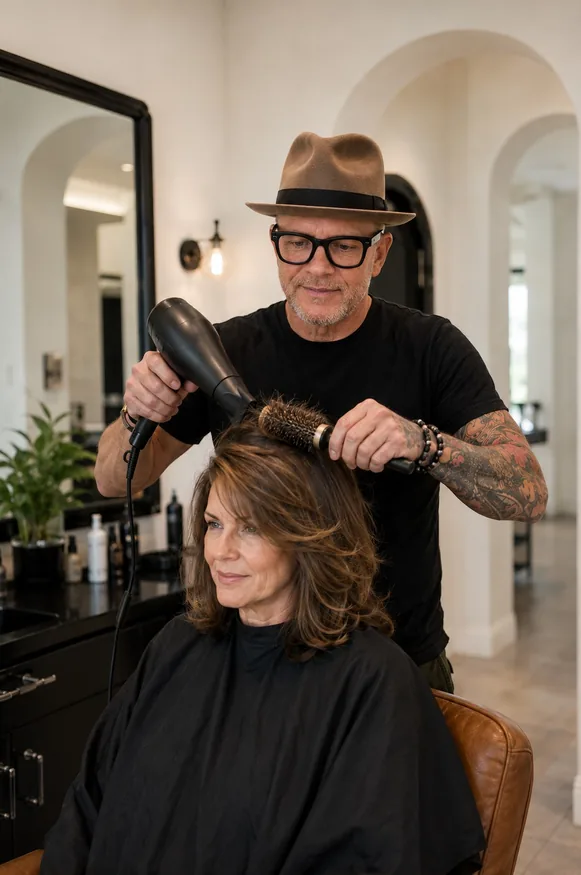
Most haircuts in Venice look sharp when you walk out and fall apart by Wednesday. I get it. After 30+ years and 15,000+ clients, I cut to how you actually style at home, then check the shape in motion during the blow dry. Women's haircut $75 includes the blow dry styling. Men's haircut $60. Standalone blow out $60. One stylist, one client, real consultation before any blade touches your hair.
Precision Haircuts in Venice, FL, done by me
30 years. 15,000+ heads. Every appointment runs through what I call The Pre-Cut Read: three reads before a tool touches your hair. That is why my work holds tone, why your grow-out reads natural, and why my chair sits at 5.0 across 100+ Google reviews.
Hair type, density, growth pattern, cowlick map. Mapped in 10 minutes before I pick up shears.
Internal layers, perimeter, face frame, weight removal planned for how you style on a Tuesday morning.
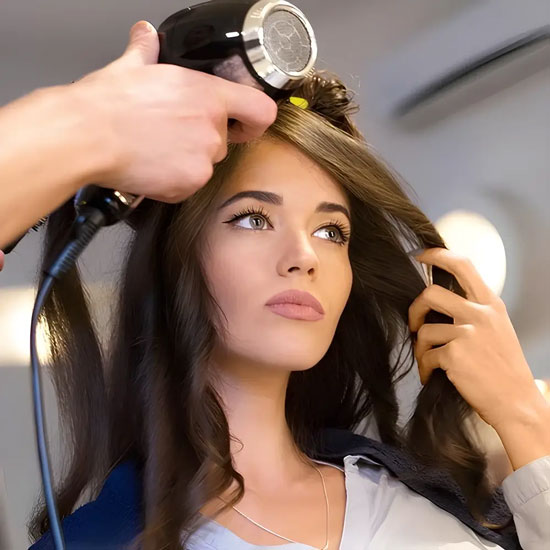
Static cuts lie. I dry the hair and watch the shape move. If something is off, I adjust before you leave.
For men: see the full Men’s Haircuts in Venice FL guide with hair-type matching table, salon vs barbershop comparison, and the complimentary Pre-Cut Read consultation.
Haircut + Blow Dry: see the full Haircut and Blow Dry in Venice FL guide with hair-length pricing table, the Pre-Cut Read consultation, and the Motion Check Blow Dry finish.
Pick the right service
Here is the deal. Most salons quietly oversell the service the client walks in asking for. I do not. I will point you to the right service even when it is not the one you came in for.
| You are here | Book this | Why |
|---|---|---|
| Women's haircut with finish styling | Women's cut $75 | Blow dry included |
| Men's haircut with scissor work | Men's cut $60 | Scissor-led, not clipper-only |
| You want a styled blow out, no cut | Standalone blow out $60 | For events or when the cut still holds |
| You need to plan a big length change | Free new-client consultation | Free 15 minutes before booking |
| You have curly or coily hair | Women's cut + dry-cut detail | Curl-by-curl finish during the consult |
Not sure which row is you? Text me a photo at 941-599-4868. I will tell you the right service before you book.
Last updated September 2026 by Scott Farmer, master hair stylist, Venice FL.
Cuts and color by appointment in a private suite in Venice. Online booking shows real-time openings. For corrections, big changes, or anything you are not sure how to book, text or call Scott directly.
New clients book two to three weeks out. Color corrections book four weeks out.
The next available chair is the one that plans first. (941) 599-4868