
Best Detangling Brush for Thick Hair
Quick answer
What is the best detangling brush for thick hair?
The best detangling brush for thick hair is a flexible-bristle wet brush used on damp, conditioned hair, worked from the ends up, never root down. The brand matters far less than the technique.
What to look for in a detangling brush for thick hair
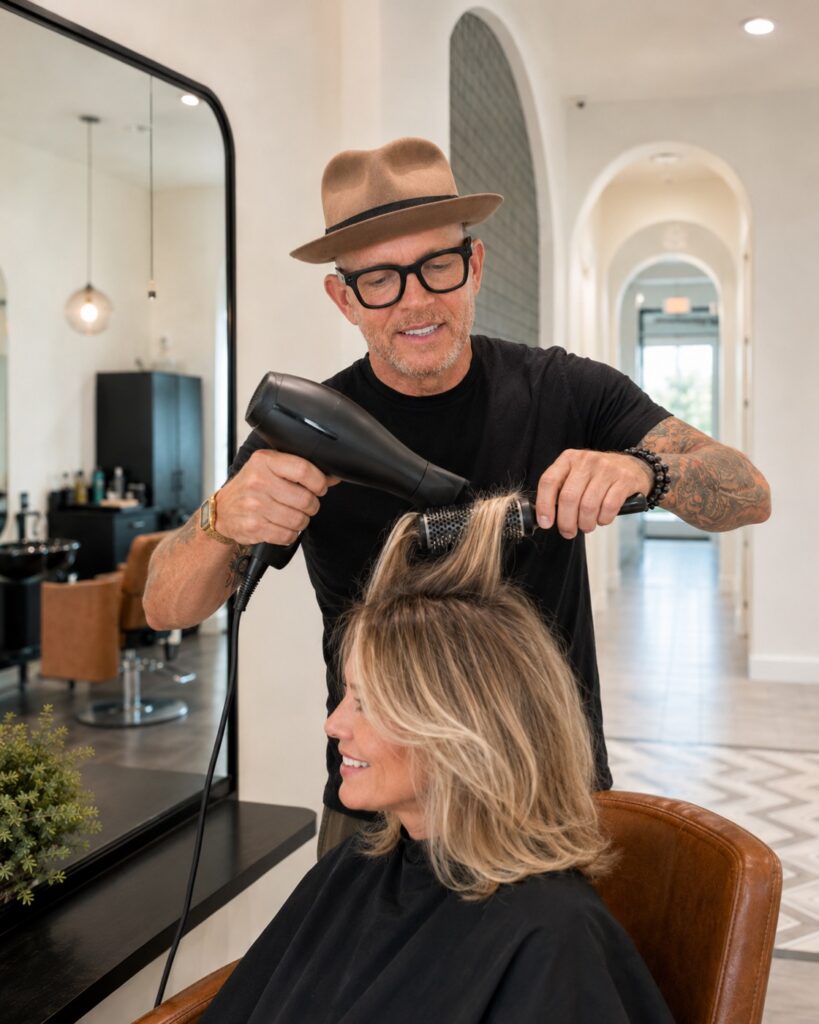
I will be blunt, because that is how I am with every client in my chair. Most brushes marketed at thick hair are sold on hype, not on how they actually perform. After 30 years behind the chair I look for three things and ignore the rest. First, flexible bristles. Hard plastic teeth that do not give will snap thick hair at the mid-shaft, and that snap is permanent. Flexible nylon or natural boar bends through the density and glides instead of grabbing. Second, a bristle layout that actually penetrates a dense section instead of skating across the surface. Third, a comfortable handle so you are not white-knuckling your way through knots.
Notice what is not on that list: a designer logo or a $45 price tag. Do not overpay for hype. A simple flexible wet brush at the drugstore usually outperforms the expensive gadget. The tool is cheap. The technique is what saves your hair.
Why technique matters more than the brush
Here is what I tell every client with thick hair. You can buy the right brush and still rip your hair out if you use it wrong. Always detangle from the ends up, never root down. Starting at the root drags every knot into one giant mat at the bottom, and that is where breakage lives. Work in small sections, hold the hair above the knot so you are not yanking the scalp, and pick away the tangle gently from the bottom.
The other half is slip. Thick hair detangles best on damp hair with a conditioner or a leave-in in it, never bone dry. The conditioner coats the strand so it slides instead of catching. This matters even more on color-treated hair. Color is 60% of my work, and I spend a lot of time protecting that investment from rough brushing. Lightened or processed hair is more porous and more fragile, so I am gentle on wet hair and I never let a client drag a stiff brush through it. The right styling product for the hair type does half the job before the brush ever touches it.
Brush type by hair texture
There is no single best brush for every thick head. Coily and curly textures detangle wet only. Straight thick hair can handle a paddle. Match the tool to your texture, then use it right.
Brush type by texture for thick hair
| Brush type | Best for | Why it works |
|---|---|---|
| Flexible-bristle wet brush | Most thick textures, damp hair | Bristles flex through knots instead of snapping the strand |
| Wide-tooth comb | Curly and coily, wet only | Space between teeth respects the curl pattern and reduces breakage |
| Mixed boar and nylon paddle | Straight, dense hair | Wide surface moves a lot of hair while boar smooths the cuticle |
| Wet brush plus leave-in | Color-treated or fragile thick hair | Added slip protects porous, processed strands from snapping |
The pattern is simple. Flexible bristles, damp hair, ends-up technique. That combination protects far more hair than any premium price tag.
How I protect thick hair from breakage
In my private one-on-one suite I work one client at a time, so nothing about your hair gets rushed. When thick hair tangles constantly, it is often a sign of something the brush cannot fix: dry ends, split ends, or a cut that has lost its shape and is fighting your density. A good conditioning plan and the right trim do more than any new brush on the shelf. Shape and balance is the key to a great haircut, and a cut that works with your thickness tangles far less in the first place.
5 steps to detangle thick hair without breakage
- Detangle on damp, conditioned hair. Slip from a conditioner or leave-in lets the brush glide.
- Work from the ends up. Never start at the root, that drags every knot into a mat.
- Section it. Thick hair detangles in pieces, not in one rushed pass.
- Use flexible bristles or a wide-tooth comb. Skip the stiff plastic teeth.
- Hold above the knot. Support the hair so you are not yanking the scalp.
Detangling thick hair FAQ
What is the best detangling brush for thick hair?
A flexible-bristle wet brush used on damp, conditioned hair. Flexible nylon or boar bends through density instead of snapping it. The brand matters far less than detangling from the ends up with good slip.
Should I detangle thick hair wet or dry?
Damp, with conditioner or a leave-in in it. Slip lets the brush slide through knots. Curly and coily thick hair should only ever be detangled wet, never bone dry.
Do I need an expensive detangling brush?
No. Do not overpay for hype. A simple flexible wet brush usually beats a $40 gadget for thick hair. Spend your money on a good conditioner and the right cut instead.
Why does my thick hair keep breaking when I brush it?
Usually stiff bristles, dry hair, or brushing root down. It can also signal dry or split ends. If it keeps breaking, a conditioning plan and a fresh trim help more than a new brush.
Is detangling different for color-treated thick hair?
Yes. Processed hair is more porous and fragile, so it needs the most slip and the gentlest handling. I add a leave-in and brush damp from the ends up to protect the color and the strand.
Next step
Not sure which salon service to book?
Use this article to narrow the decision, then compare the service menu or ask Scott directly before booking your appointment in Venice, FL.
Book Your Appointment
Private one-on-one service with Scott Farmer in Venice, FL.