
STATUS: LOCAL DRAFT ONLY. Not published. Publishing this page creates a new URL, which conflicts with the standing stabilization hold (no new URLs). Scott decides. See glossary-NOTES.md.
Balayage, foilayage, babylights, and a money piece are all ways of putting lighter or darker color into hair. The difference is how the color goes on, how much of the head it covers, and how it grows out. This guide defines every technique in plain English, with real photos from my chair in Venice, FL, so you can walk into any salon and ask for exactly what you want.
I’m Scott Farmer. I’ve spent more than 30 years behind the chair, and these are the same explanations I give clients during a consultation.
Jump to a technique
- Balayage
- Foilayage
- Full Highlights (Full Foil)
- Partial Highlights
- Babylights
- Face-Framing Highlights
- Money Piece
- Lowlights
- Dimensional Color
- Gray Blending
- Single-Process Color
- Root Touch-Up
- Toner and Gloss
- Ombre vs. Sombre
- Compare the techniques side by side
- Questions clients ask me
Balayage
Balayage is hair color painted onto the surface of the hair by hand, no foils. The word is French for “to sweep.” Because the color is swept on freehand, the result is soft and sun-kissed, brighter at the ends and more natural at the root. There is no hard line when it grows out, which is why balayage owns the “lived-in color” look.
- Who it suits: Anyone who wants low-maintenance color that grows out gracefully. Great first color service.
- Typical maintenance: 12 to 16 weeks between refreshes, and many clients stretch a full repaint to 3 to 6 months. A gloss around week 6 keeps the tone fresh.
- At my chair: Full balayage with glaze, $265, about 2 hours 30 minutes. Partial with glaze, $210.
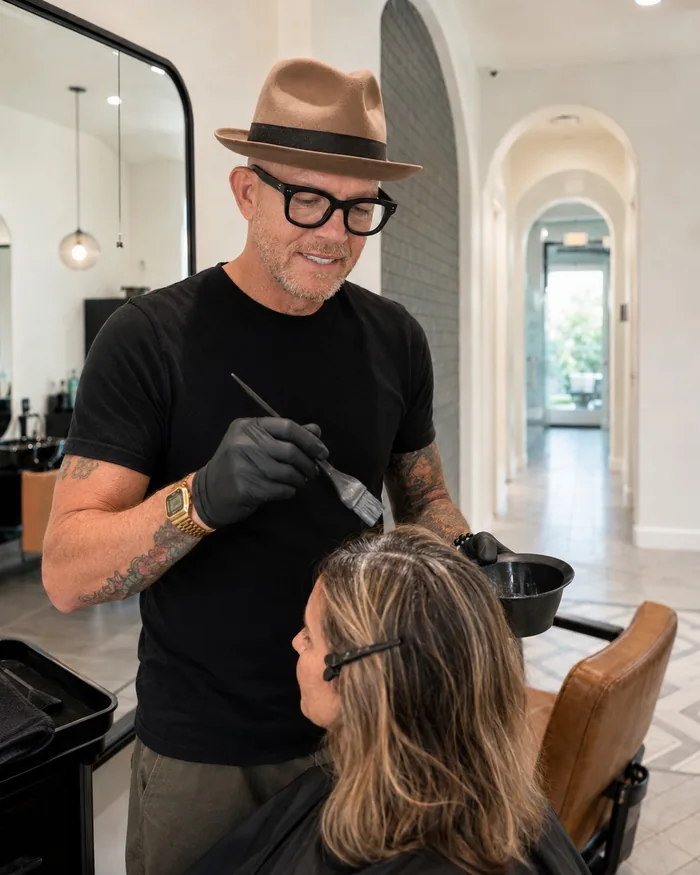
Photo: Scott Farmer Hair Salon, Venice FL
Deeper read: my balayage service page and my post on how I protect balayage in Gulf Coast humidity.
Foilayage
Foilayage is balayage painted by hand, then wrapped in foil. The foil traps heat, so the lightener lifts further than open-air balayage can. You get the soft, blended root of balayage with the brightness of a foil highlight. Back when I was an Artistic Director at Toni and Guy, we drilled placement like this until it was muscle memory, and placement is exactly what makes foilayage work.
- Who it suits: Darker bases that want to go noticeably blonder without a harsh regrowth line.
- Typical maintenance: 12 to 16 weeks, the same cadence as balayage. A gloss every 6 to 8 weeks in between keeps the tone clean.
- At my chair: From $225, 3 to 4 hours, Schwarzkopf glaze included.
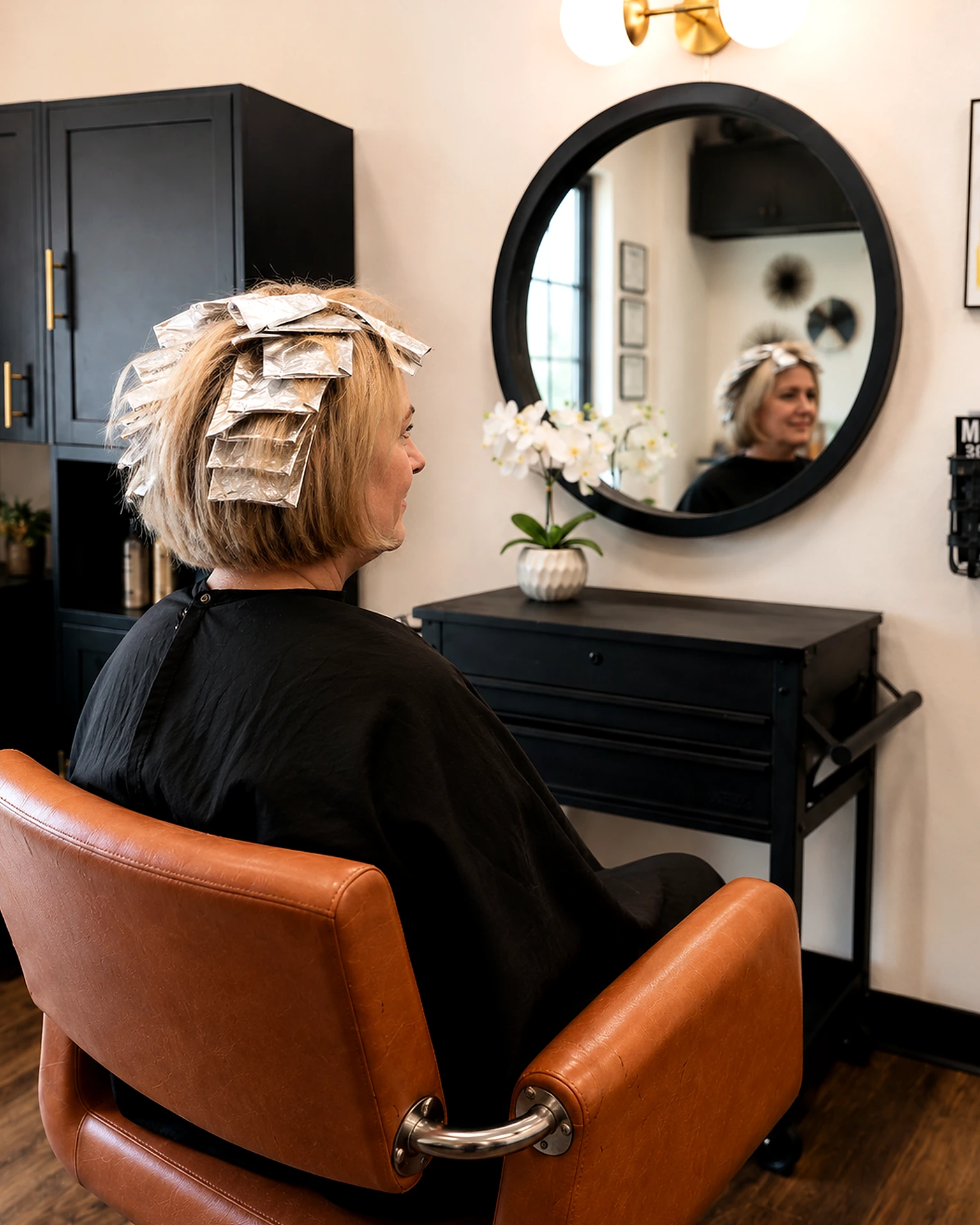
Photo: Scott Farmer Hair Salon, Venice FL
Deeper read: foilayage explained in full.
Full Highlights (Full Foil)
Full highlights, also called a full foil, weave fine sections of hair into foils across the entire head, top, sides, and underneath. It is the most complete lightening service short of an all-over bleach. Because every section is foiled from the root, the result is bright, uniform, and deliberate rather than sun-kissed.
- Who it suits: Anyone who wants maximum brightness everywhere, including underneath when the hair is worn up.
- Typical maintenance: 6 to 8 weeks. Root regrowth shows sooner because color starts at the scalp.

Photo: Scott Farmer Hair Salon, Venice FL
Deeper read: full highlights and how foil highlights work.
Partial Highlights
Partial highlights foil only the hair you see: the top, the part line, and around the face. The underneath stays your natural color, which adds depth and cuts both the cost and the chair time. Most of my highlight clients in Venice are partials, because Florida sun does some of the lifting on the rest.
- Who it suits: First-time highlight clients, anyone on a budget, anyone who wears their hair down.
- Typical maintenance: 6 to 8 weeks, stretchable further because the regrowth is only on top.
- At my chair: $170, about 1 hour 30 minutes.

Photo: Scott Farmer Hair Salon, Venice FL
Deeper read: partial highlights, and how they compare to a full foil.
Babylights
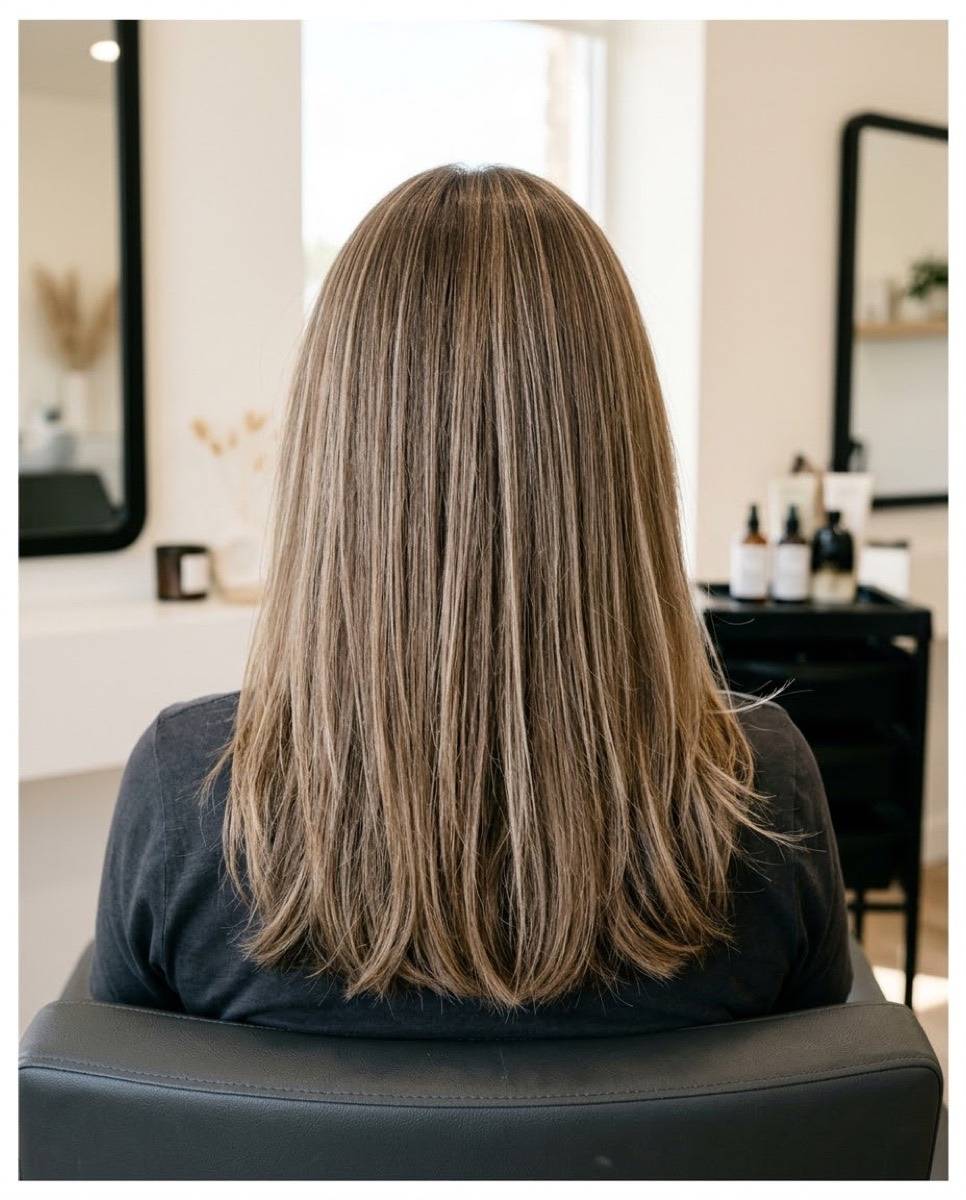
Babylights are the finest highlights there are. The sections woven into each foil are so thin that the finished color reads as one soft, luminous shade rather than visible streaks. Think of the hair a child gets after a summer outside. That subtlety is the entire point, and it is also why babylights take longer to place than standard foils.
- Who it suits: Fine hair, first-timers nervous about stripes, anyone who wants “born with it” color.
- Typical maintenance: 10 to 14 weeks. The fine weave makes regrowth very forgiving.
Face-Framing Highlights
Face-framing highlights lighten only the hair that borders your face, from the part down through the front hairline. They brighten your complexion the way sitting near a window does, without committing the rest of your head to color. It is the smallest highlight service on my menu and the one I suggest most often as a first step.
- Who it suits: Anyone testing lighter color, or refreshing an older highlight between full sessions.
- Typical maintenance: 6 to 10 weeks.
- At my chair: $125.
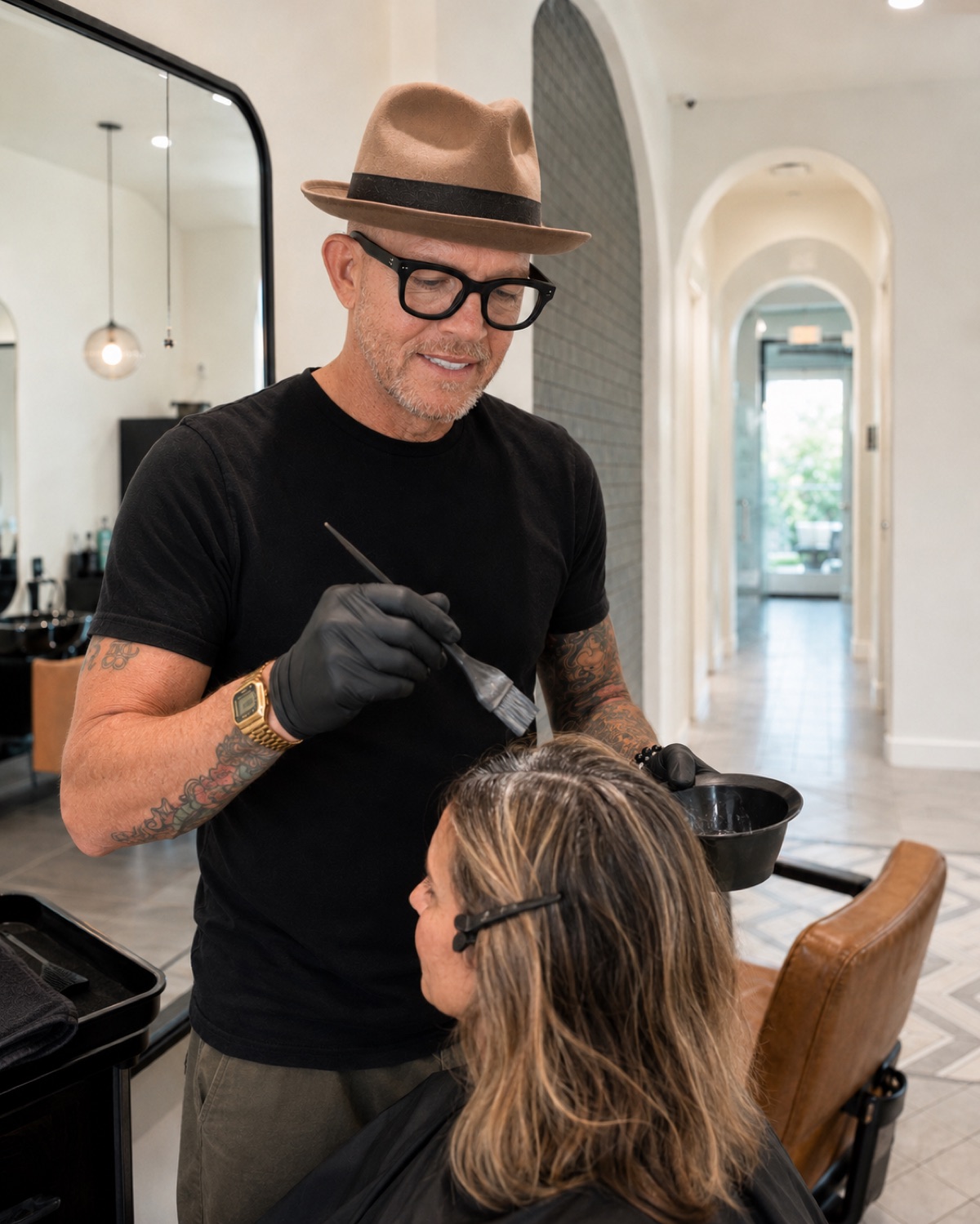
Photo: Scott Farmer Hair Salon, Venice FL
Deeper read: money piece vs. face-framing highlights, compared properly.
Money Piece
A money piece is a bold, bright section of color right at the front hairline, the two face-framing panels you see the moment someone looks at you. It is stronger and more deliberate than standard face-framing highlights. The name comes from stylists calling it the piece that makes the whole color look expensive.
- Who it suits: Anyone who wants visible impact from one small service. Pairs beautifully with balayage.
- Typical maintenance: 6 to 10 weeks, since regrowth shows at the part line first.
- At my chair: $125.
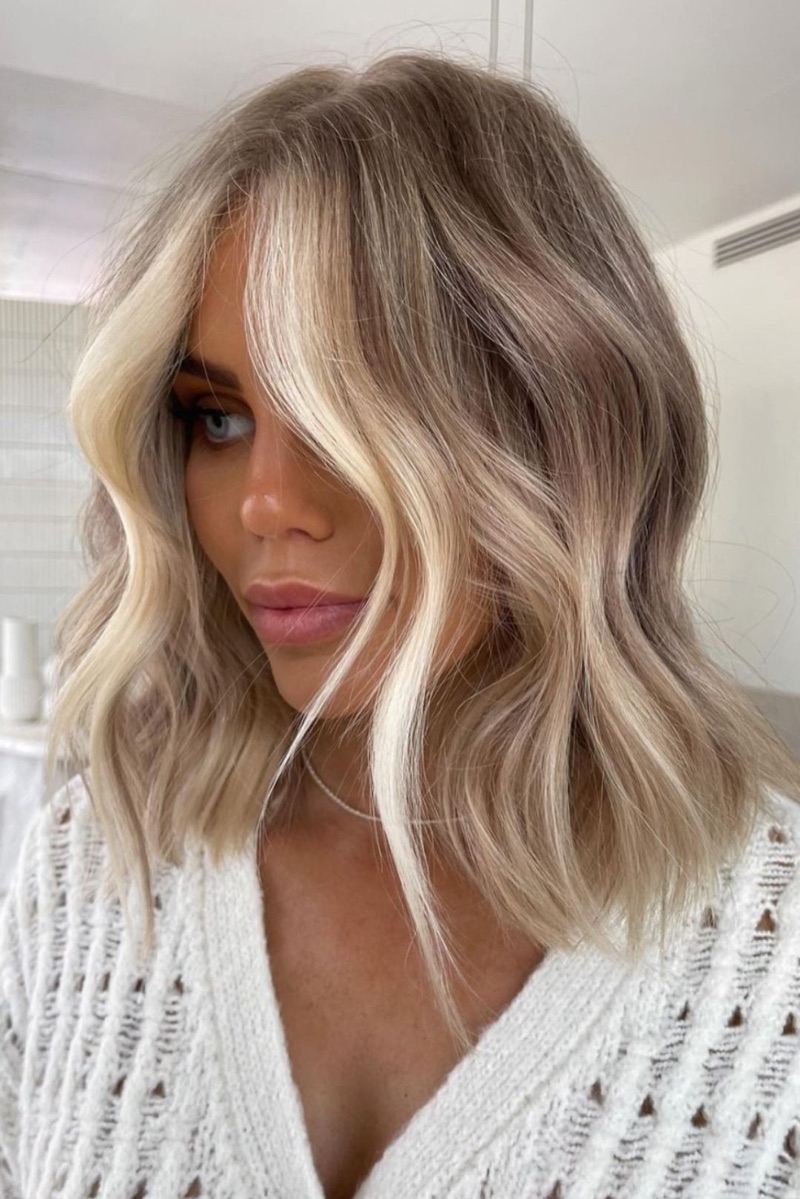
Photo: Scott Farmer Hair Salon, Venice FL
Deeper read: my money piece service page.
Lowlights
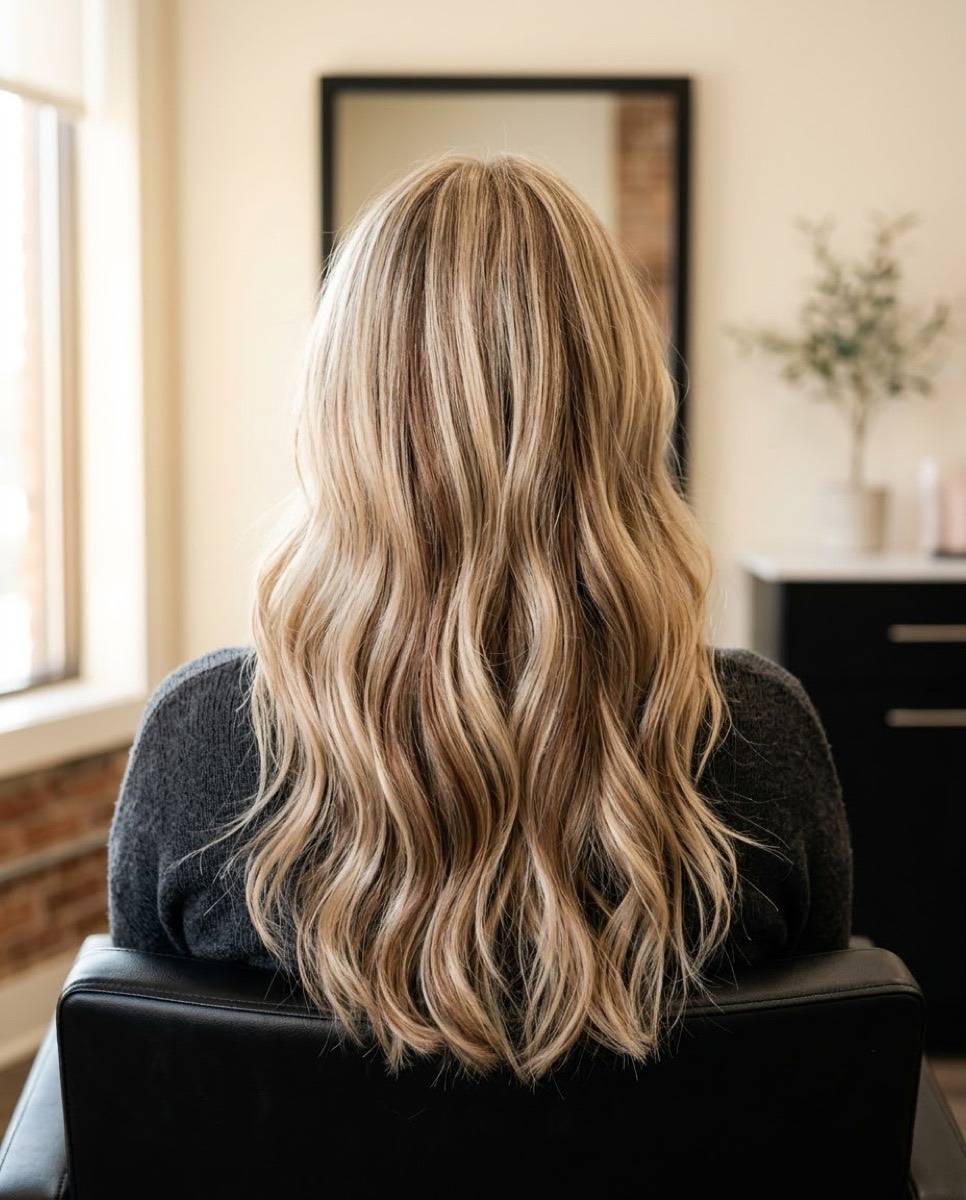
Lowlights are the reverse of highlights: sections woven darker than your base instead of lighter. They restore depth to hair that has become too uniformly light and they are one of the quiet workhorses of gray blending. Almost nobody asks for lowlights by name. They ask for “richer” or “less flat,” and lowlights are how I get there.
- Who it suits: Over-highlighted hair, flat all-over blonde, and gray blending on lighter bases.
- Typical maintenance: 8 to 12 weeks. Darker regrowth lines are gentler than lighter ones.
Dimensional Color
Dimensional color is any color plan that uses two or more tones in the same head: highlights with lowlights, a darker root with lighter ends, or a glaze over foils. The opposite is flat, single-tone color out of one bottle. Dimension is what makes hair color look like hair instead of paint, and nearly everything else in this glossary is a way of creating it.
- Who it suits: Everyone, honestly. It is a result, not a single service, so the plan varies by head.
- Typical maintenance: Follows whichever techniques are used to build it.

Photo: Scott Farmer Hair Salon, Venice FL
Deeper read: hair color and highlights, and how I combine them.
Gray Blending
Gray blending softens the line between your gray and your base color instead of covering the gray completely. I do it with dimensional lowlight work, sometimes with highlights and a toner, so the gray reads as an intentional part of the color rather than as regrowth. It is how you stop the every-three-weeks root battle without one dramatic chop-and-surrender.
- Who it suits: Anyone 30 to 70 percent gray who is tired of hard regrowth lines, or transitioning to natural silver.
- Typical maintenance: 10 to 14 weeks. The whole point is a softer, slower grow-out.
- At my chair: From $210, about 2 hours 30 minutes.
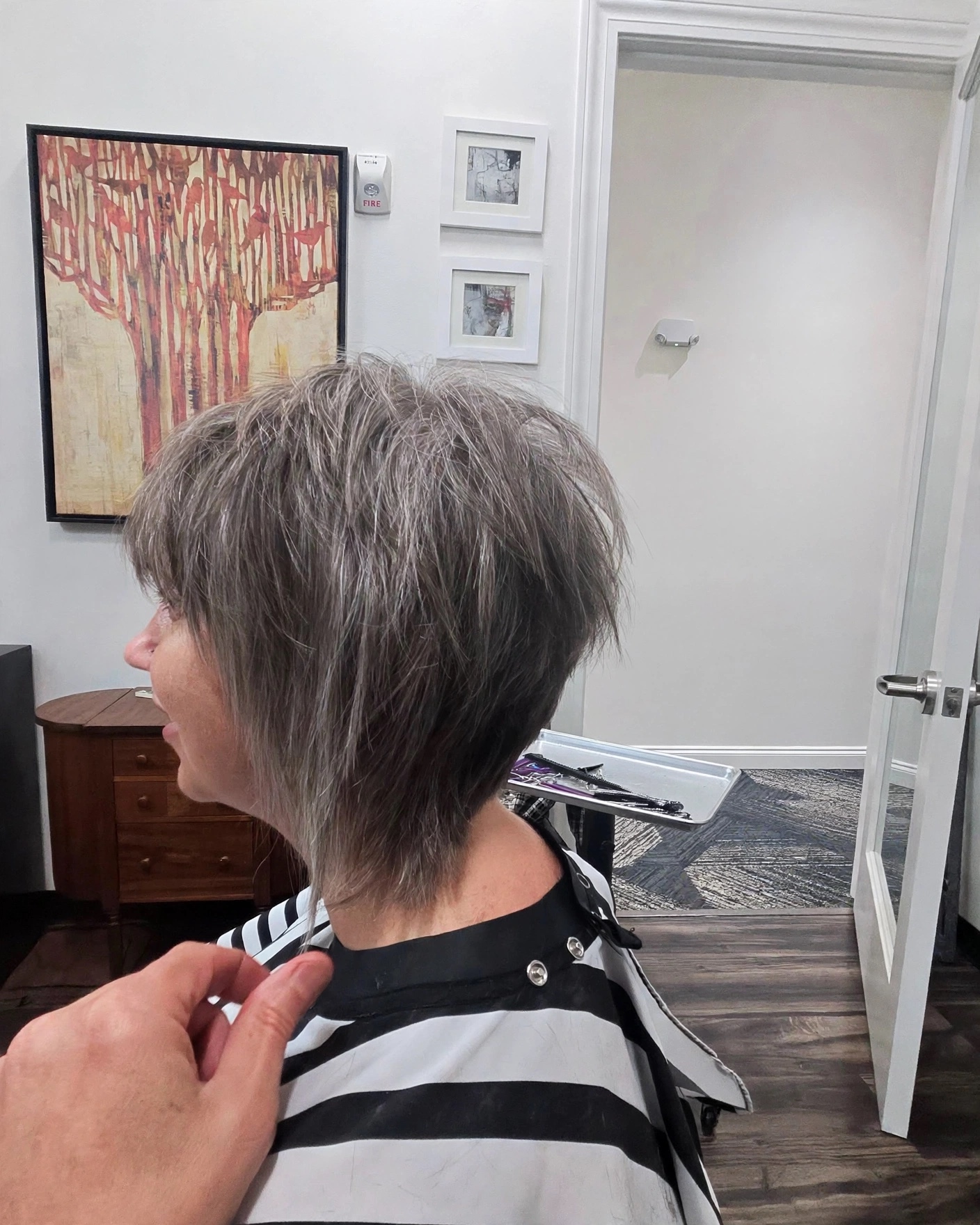
Photo: Scott Farmer Hair Salon, Venice FL
Deeper read: my gray blending service page. Gray blending is not the same as gray coverage. Coverage is the single-process service below.
Single-Process Color
Single-process color is one formula, applied once, all over. It covers gray completely, deepens or refreshes your shade, or takes you darker in a single step. “Single process” just means nothing else happens in the same visit: no foils, no second application. It is the most predictable color service there is, and the fastest.
- Who it suits: Full gray coverage, rich brunettes and reds, anyone who wants one even shade.
- Typical maintenance: 4 to 6 weeks, driven by how fast your roots show.
- At my chair: $125, about 1 hour.

Photo: Scott Farmer Hair Salon, Venice FL
Deeper read: my single-process color page.
Root Touch-Up
A root touch-up colors only the new growth at your scalp, usually the first half inch to inch, and leaves the rest of your hair alone. It keeps a single-process color looking fresh between full applications, and because color is not repeatedly layered over the ends, it actually keeps the lengths healthier.
- Who it suits: Anyone maintaining all-over color or full gray coverage between visits.
- Typical maintenance: Every 4 to 6 weeks.
- At my chair: $125, about 1 hour.
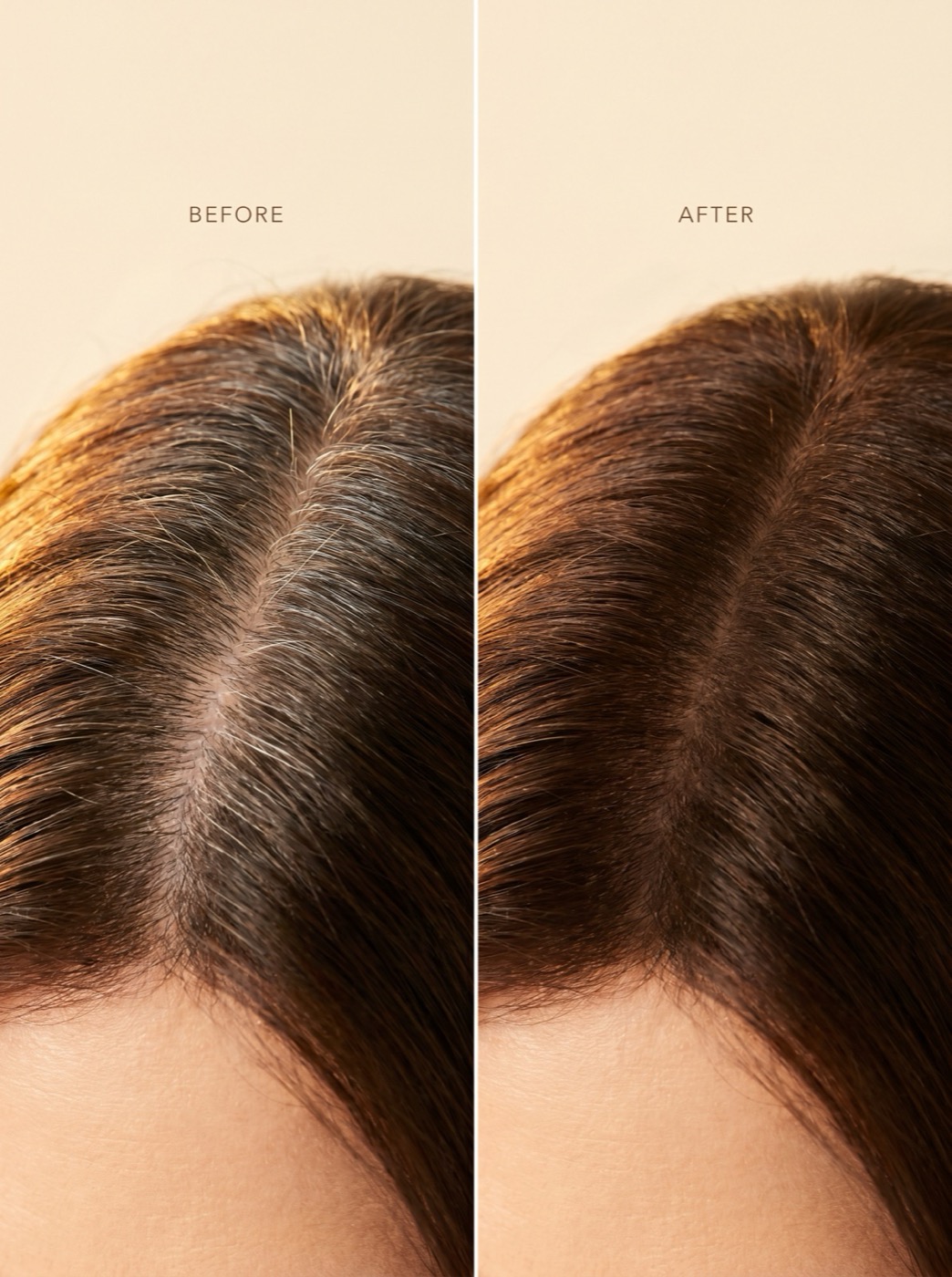
Photo: Scott Farmer Hair Salon, Venice FL
Deeper read: root touch-ups, and when a touch-up stops being enough.
Toner and Gloss
A toner and a gloss are the same family of product: a sheer, semi or demi-permanent color that adjusts tone rather than lightening or covering. A toner corrects, killing brass and yellow after lightening. A gloss refreshes, adding shine and richness to color that has faded. Same jar, different job. Neither one lightens hair, ever.
- Who it suits: Every highlight and balayage client, and anyone whose color has gone dull between visits.
- Typical maintenance: Every 4 to 8 weeks. It fades gradually, so there is no regrowth line at all.
- At my chair: Gloss or toner refresh, $80. With a blow out, $140.
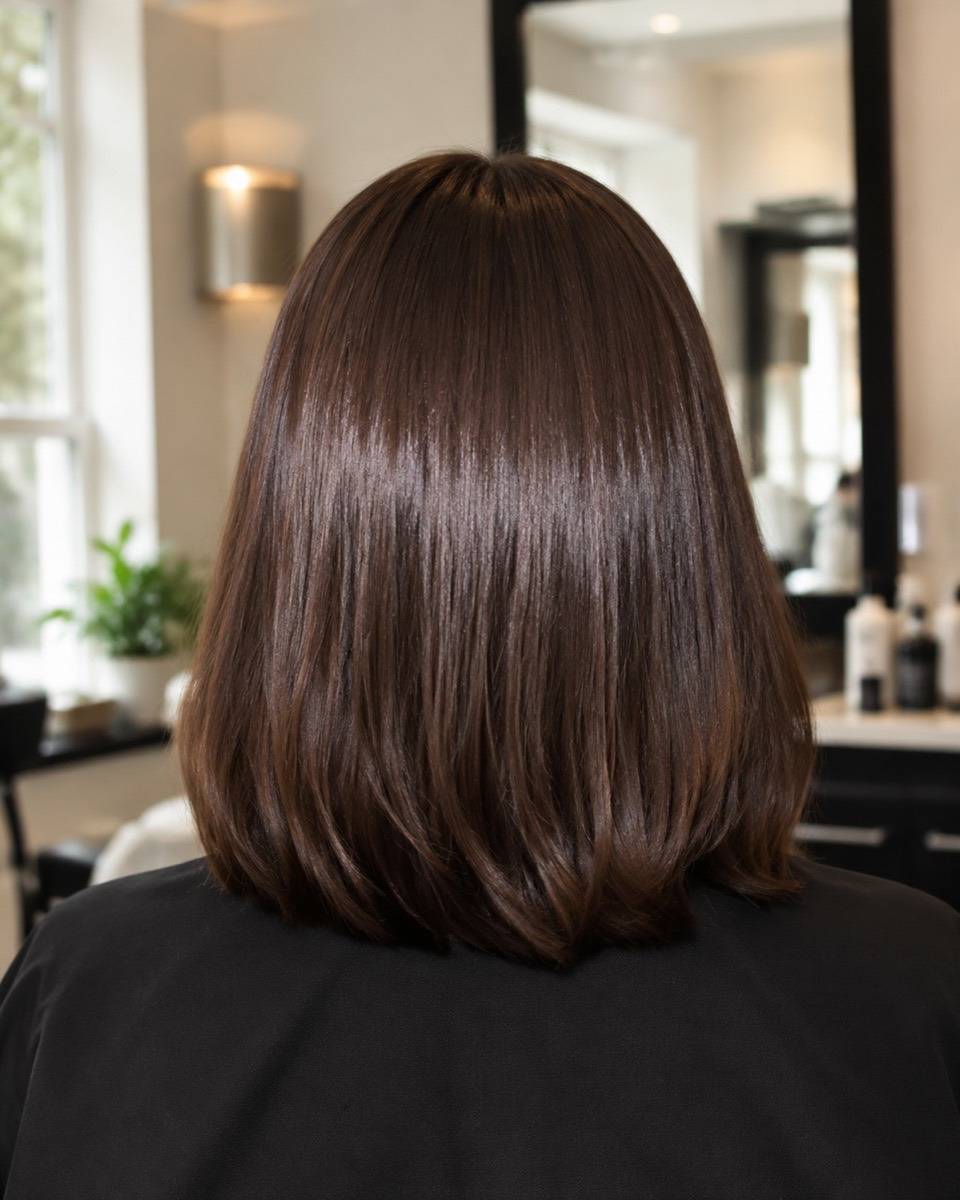
Deeper read: my gloss and toner page.
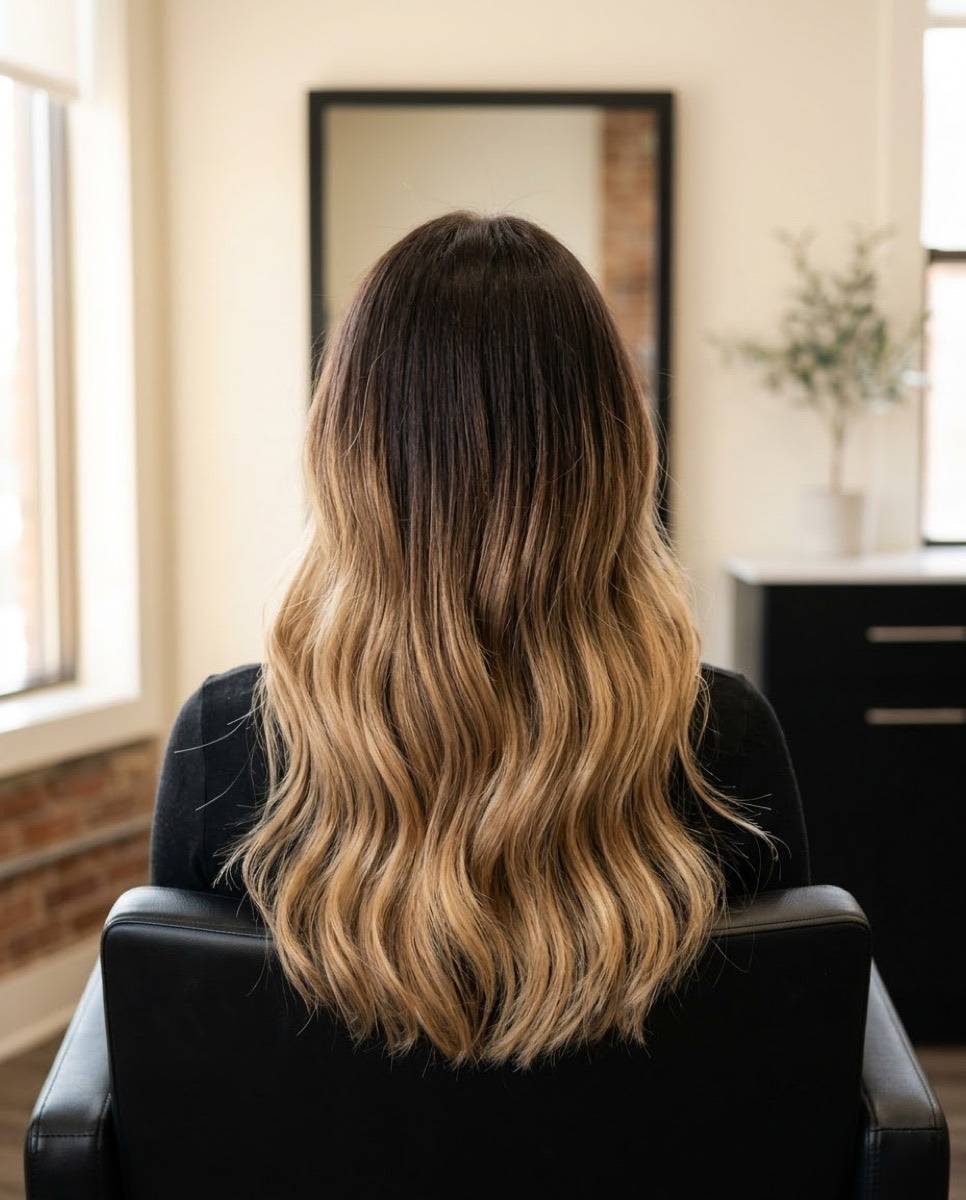
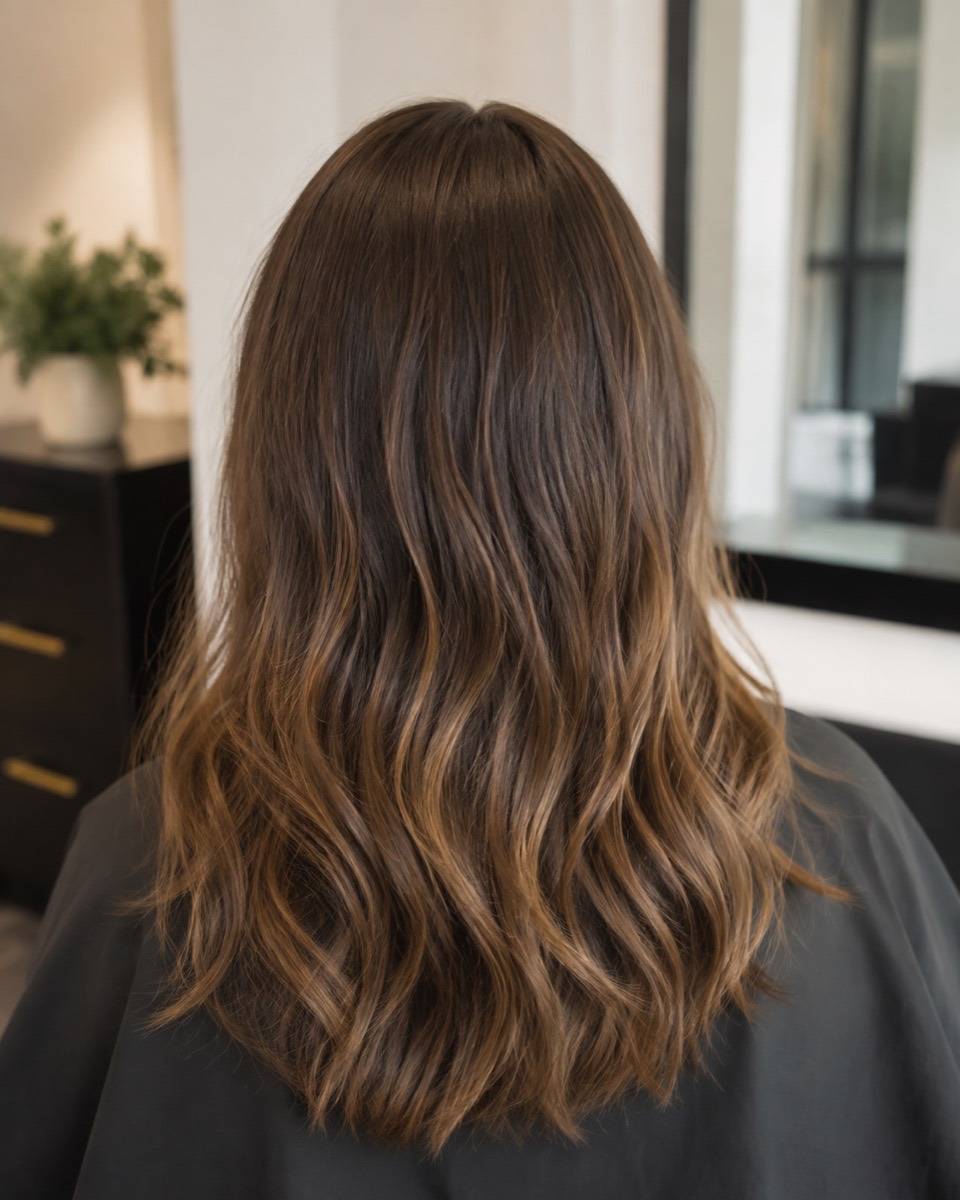
Ombre vs. Sombre
Ombre is a visible two-tone look: darker from roots to mid-length, then clearly lighter ends, with a deliberate contrast between the two. Sombre is “soft ombre,” the same idea with the contrast turned way down so the shift reads gradual and sunlit. Both are results rather than application methods. I usually build them with balayage or foilayage.
- Who it suits: Ombre for high-contrast drama, sombre for a natural beach effect. Both are very low maintenance.
- Typical maintenance: 3 to 4 months, since the root area is untouched.
One honest note: if a previous color job has left banding, hot roots, or uneven patches, that is not a glossary problem, it is color correction, and it needs a consultation first.
Quick comparison table
| Technique | How it goes on | Regrowth line | Typical interval | At my chair |
|---|---|---|---|---|
| Balayage | Hand-painted, no foils | Softest | 12 to 16 weeks | $265 full, $210 partial |
| Foilayage | Hand-painted, then foiled | Soft | 12 to 16 weeks | from $225 |
| Full highlights | Foils, whole head | Visible | 6 to 8 weeks | see menu |
| Partial highlights | Foils, top and front only | Moderate | 6 to 8 weeks | $170 |
| Babylights | Ultra-fine foils | Very soft | 10 to 14 weeks | see menu |
| Money piece / face-framing | Front hairline only | At the part | 6 to 10 weeks | $125 |
| Gray blending | Lowlights + highlights + toner | Soft by design | 10 to 14 weeks | from $210 |
| Single-process | One formula, all over | Hard line | 4 to 6 weeks | $125 |
| Root touch-up | Regrowth only | Resets it | 4 to 6 weeks | $125 |
| Gloss / toner | Sheer tone, no lift | None | 4 to 8 weeks | $80 |
Questions clients ask me
What is the difference between balayage and foilayage?
The application is identical, hand-painted color, but foilayage wraps each painted section in foil. The foil traps heat, so foilayage lifts lighter and brighter than balayage can. Choose balayage for the softest, most natural result and the longest stretch between visits. Choose foilayage when you start dark and want to end up noticeably blonde.
Are babylights the same as highlights?
Babylights are highlights, just taken to the finest possible weave. A standard highlight foils sections thick enough to read as visible ribbons of color. Babylights weave sections so thin that the eye blends them into one soft, even shade. Same tools, same chemistry, different section size, very different result.
Is a money piece the same as face-framing highlights?
They live in the same real estate but at different volumes. Face-framing highlights are soft, blended brightness around the face. A money piece is a bolder, more saturated panel right at the front hairline, meant to be seen as its own statement. I break the differences down fully in money piece vs. face-framing highlights.
Is gray blending the same as highlights?
No. Highlights are one tool gray blending can use. Gray blending is a strategy that combines lowlights, sometimes highlights, and a toner to soften the contrast between your gray and your base color. And gray blending is not gray coverage either. Coverage hides gray completely with single-process color. Blending makes gray look intentional.
What is the difference between a toner and a gloss?
Chemically they are the same sheer, low-commitment color. The difference is the job. A toner corrects unwanted tones, like brass after lightening. A gloss refreshes shine and richness on color that has faded. Neither lightens hair. If someone promises a toner will make you blonder, that is lightener wearing a nicer name.
Want to use these photos or definitions?
Yes, you can. Bloggers, stylists, and editors are welcome to use any photo or definition on this page, free, on one condition: credit “Scott Farmer Hair Salon, Venice FL” with a link to scottfsalon.com. For a high-resolution version of any photo, contact me and I’ll send it over.
The client photos on this page were taken in my private suite in Venice, Florida, real clients and real light. The five technique illustrations (babylights, lowlights, gloss, ombre, sombre) are labeled as illustrations in their captions; the credit-link condition covers those too.
Not sure which technique your hair actually needs? That is what a consultation is for, or start with the color match quiz.